Before I Studied Users, I Studied Humans
The first time I observed a usability test, I noticed something that had nothing to do with the interface. A participant hit a moment of friction — a confusing screen, an unclear label — and instead of trying a new path, she went back and repeated the exact same failed action. Twice. A typical UX read might chalk that up to confusion, or a design flaw needing a clearer call-to-action. I read it differently: she was choosing the devil she knew over the uncertainty of trying something new, even though the "devil" wasn't working.

That instinct didn't come from my UX training. It came from studying animal behavior years earlier.
Bones weren't the interesting part
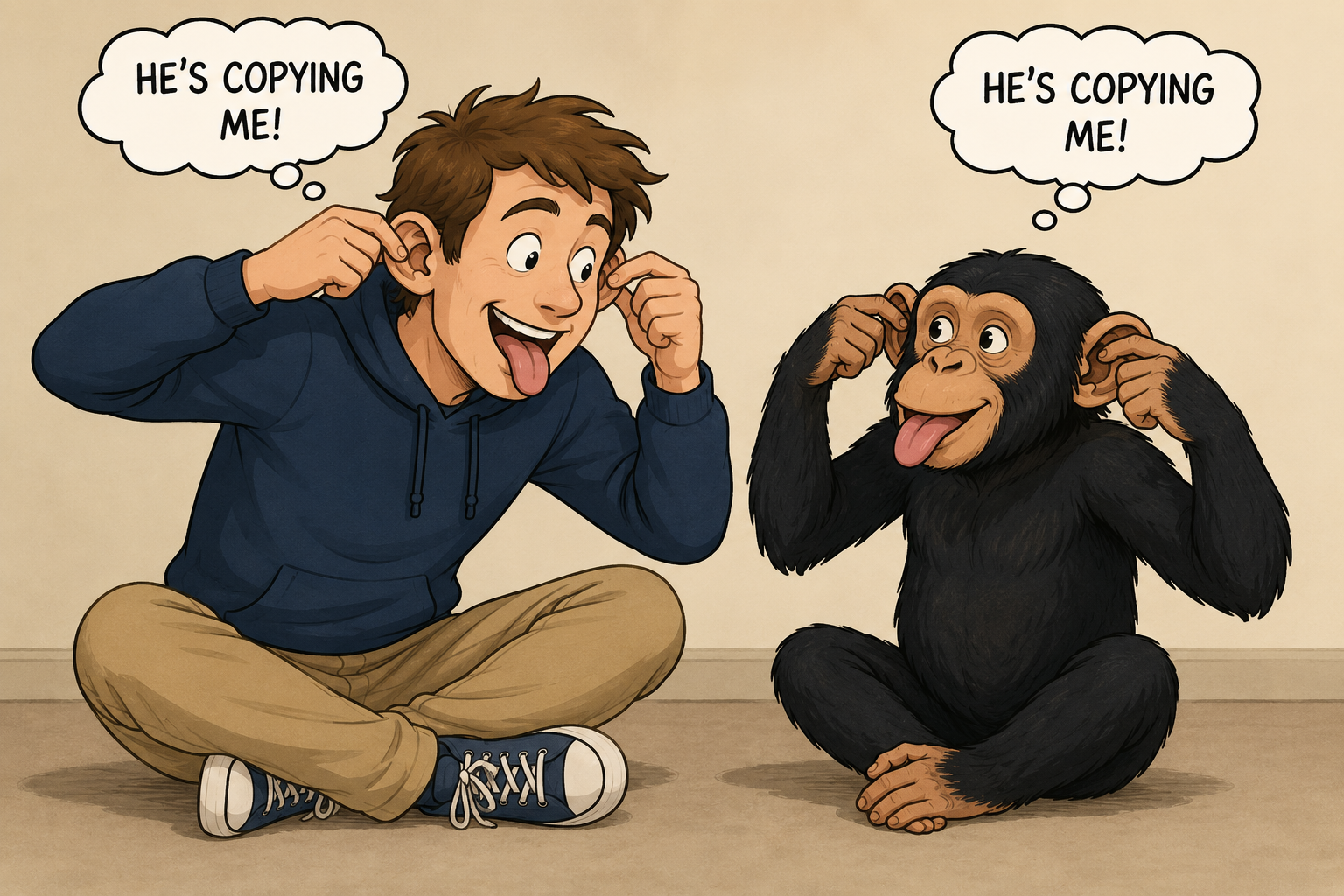
When I studied biological anthropology, the fossil record was there, but what actually held my attention was non-human animal behavior — the idea that you could understand humans better by first understanding the species we evolved alongside and the pressures that shaped all of us. I was heavily influenced by E.O. Wilson's Sociobiology, which argues that a great deal of social behavior — in humans included — is rooted in evolutionary biology, not just culture. It's a controversial book; plenty of people push back on it. I don't. I find Wilson's core argument nearly airtight. Nurture matters, but it's operating on top of a nature that is much harder to override than most of us want to admit.
That's the lens I never set down when I moved into UX.
The immune system and the fear of "other"
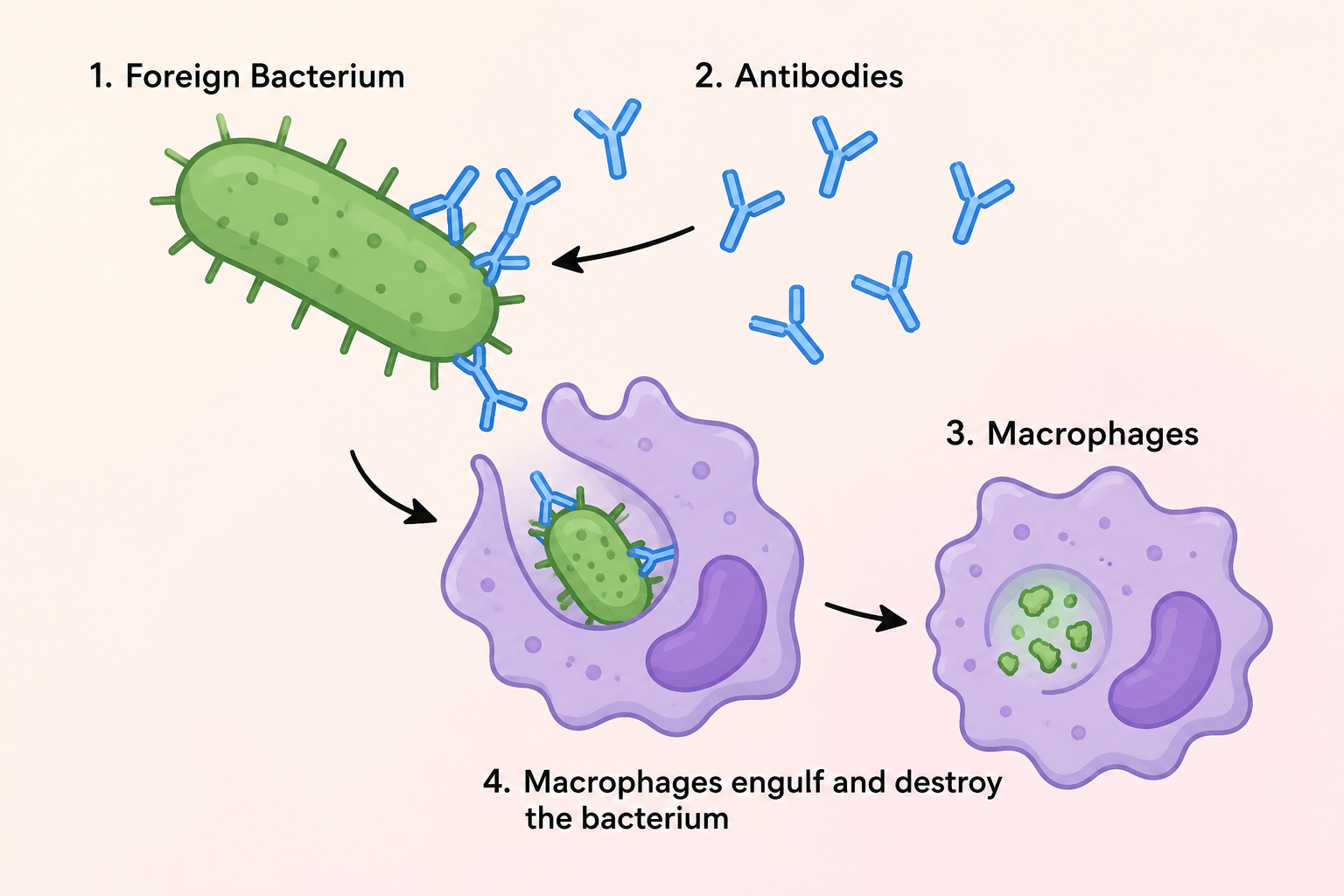
One idea I come back to constantly: our immune systems evolved to identify and destroy "other" — a foreign bacterium, a virus, anything not-self. I think this same architecture shows up in how humans respond to unfamiliar people, ideas, and situations. We don't just dislike change or strangeness intellectually; there's something closer to a biological alarm going off. That's why "just explain the benefits" so rarely overcomes someone's resistance to a new interface, a new workflow, or a new way of doing something familiar. You're not arguing with logic. You're arguing with an immune response.
Why the savanna still runs the show
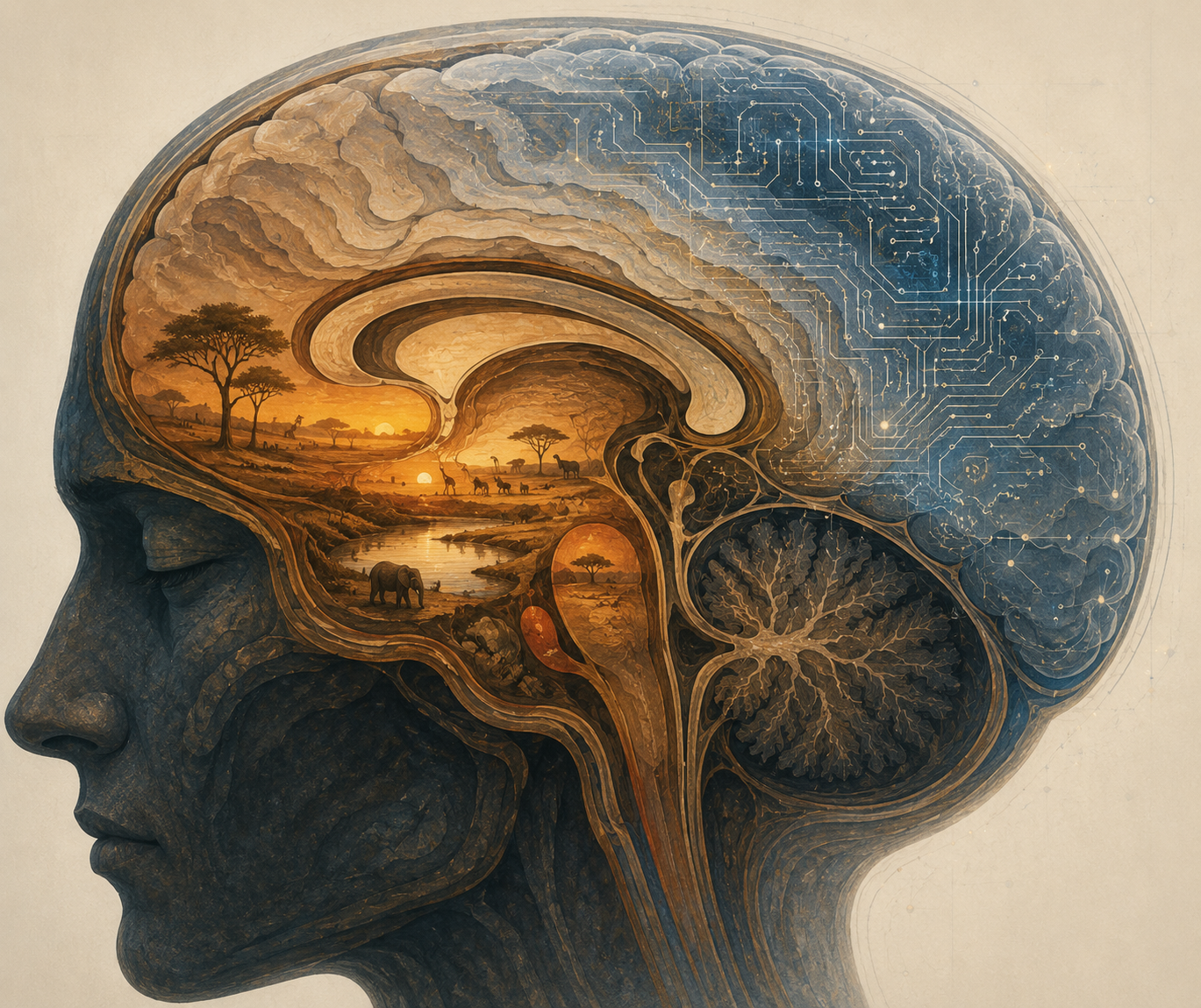
Humans evolved in environments where resources were scarce and unpredictable, and where a wrong bet could mean not surviving the season. That history left us with a deep aversion to risk and change — the devil-you-know instinct isn't irrational, it's adaptive. Sticking with a bad-but-known situation was, for most of human history, safer than gambling on an unknown better one.
I think about this every time I design something that asks a person to adopt a new habit. With Droma, the question was never just "is this tracker useful." It was: will a person with chronic migraine and POTS — already managing a body that feels unpredictable — trust that the effort of logging symptoms will pay off? The savanna brain doesn't do effort without a fairly certain reward. Same with Lifebook: asking someone to start preserving memories in a new format requires convincing a very old part of the brain that this new thing is worth the resources it costs, before there's any proof it will be.
What this changes about how I do the work
Most UX research treats resistance to change as a design or communication problem — fix the onboarding, clarify the value prop, reduce the friction. Those things matter. But they're operating on the assumption that people are, underneath it all, rational actors weighing costs and benefits in the moment. My anthropology background makes me skeptical of that assumption. People aren't failing to see the value of a product. They're running a much older piece of software that evolved to keep them alive, and it doesn't update easily just because the interface got cleaner.
I don't think this makes UX research wrong. I think it's usually working at the wrong depth. Asking "why didn't this user complete the flow" is a good question. Asking "what is this behavior protecting them from" is a better one — and it's the one I learned to ask long before I ever opened Figma.
Images created with ChatGPT.