Adding to a Career, Not Changing It
How does someone with 20+ years in marketing and executive coaching make the leap into UX design? The more I've sat with this question, the more I think it's the wrong one. This isn't a career change. It's a career addition.
Every job search is frustrating. This one has its own particular flavor of it: most UX postings want 3+ years of direct UX experience. I don't have that. What I have is something adjacent — and it turns out to matter more than I expected.
What marketing strategy already taught me
In marketing work, I had to understand an audience's needs and behavior, test messaging against real reactions, and adjust strategy based on what wasn't working. In UX terms, that's research → insight → iteration.
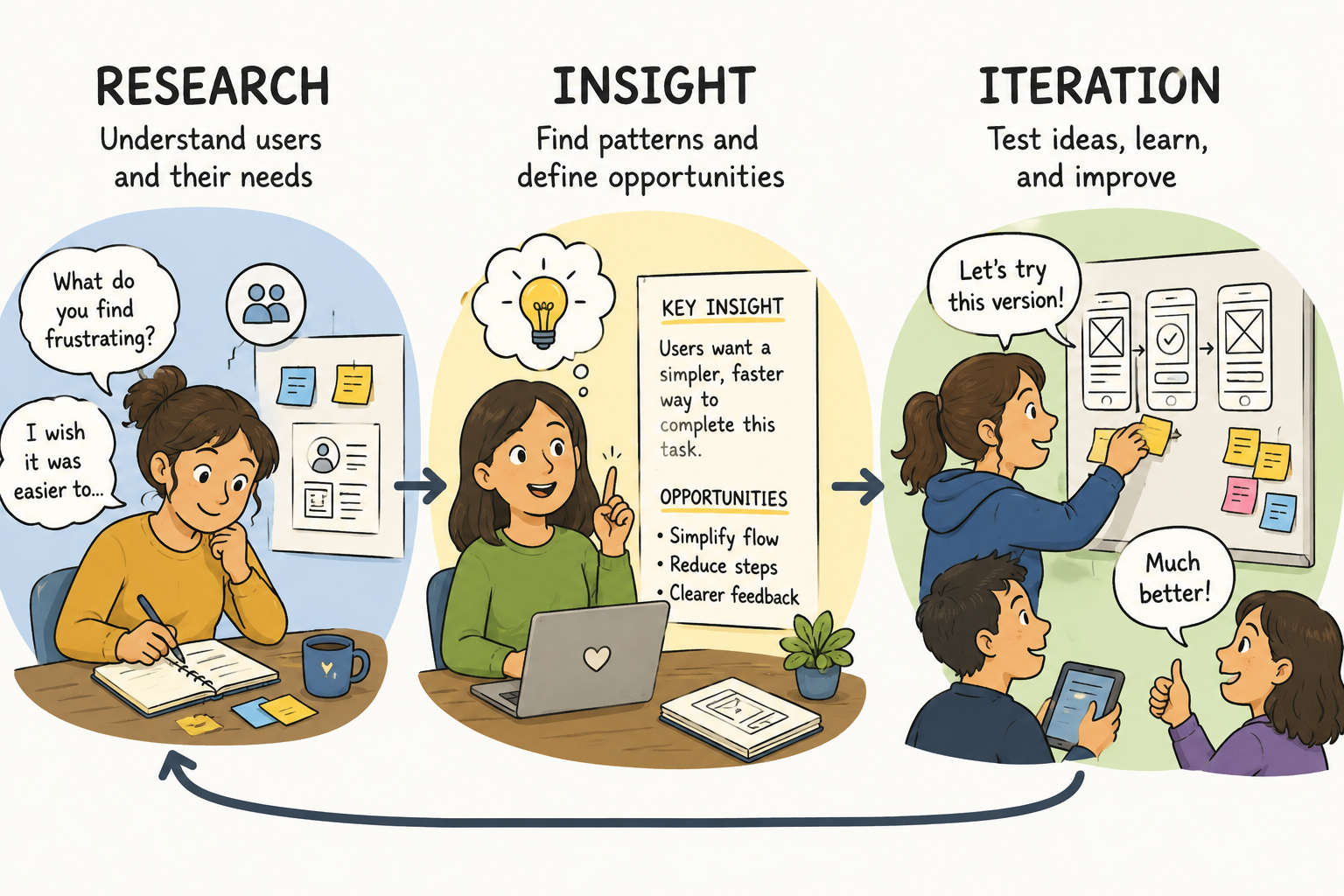
I once worked with a podcast client who had a clear vision for her title, cover art, and content — before doing any listener research. When we finally surveyed her audience, they wanted something different from what she'd imagined. Acting on that gap is what made the podcast work. It's the same move UX designers make when they let research override their own assumptions.
What coaching already taught me
Executive coaching trained a different but equally essential skill: drawing out what someone actually needs, as opposed to what they say they want. Holding space for ambiguity. Asking the right question instead of supplying the answer. UX research runs on the same instinct — you don't take a stated want at face value, you look for the pattern underneath it.
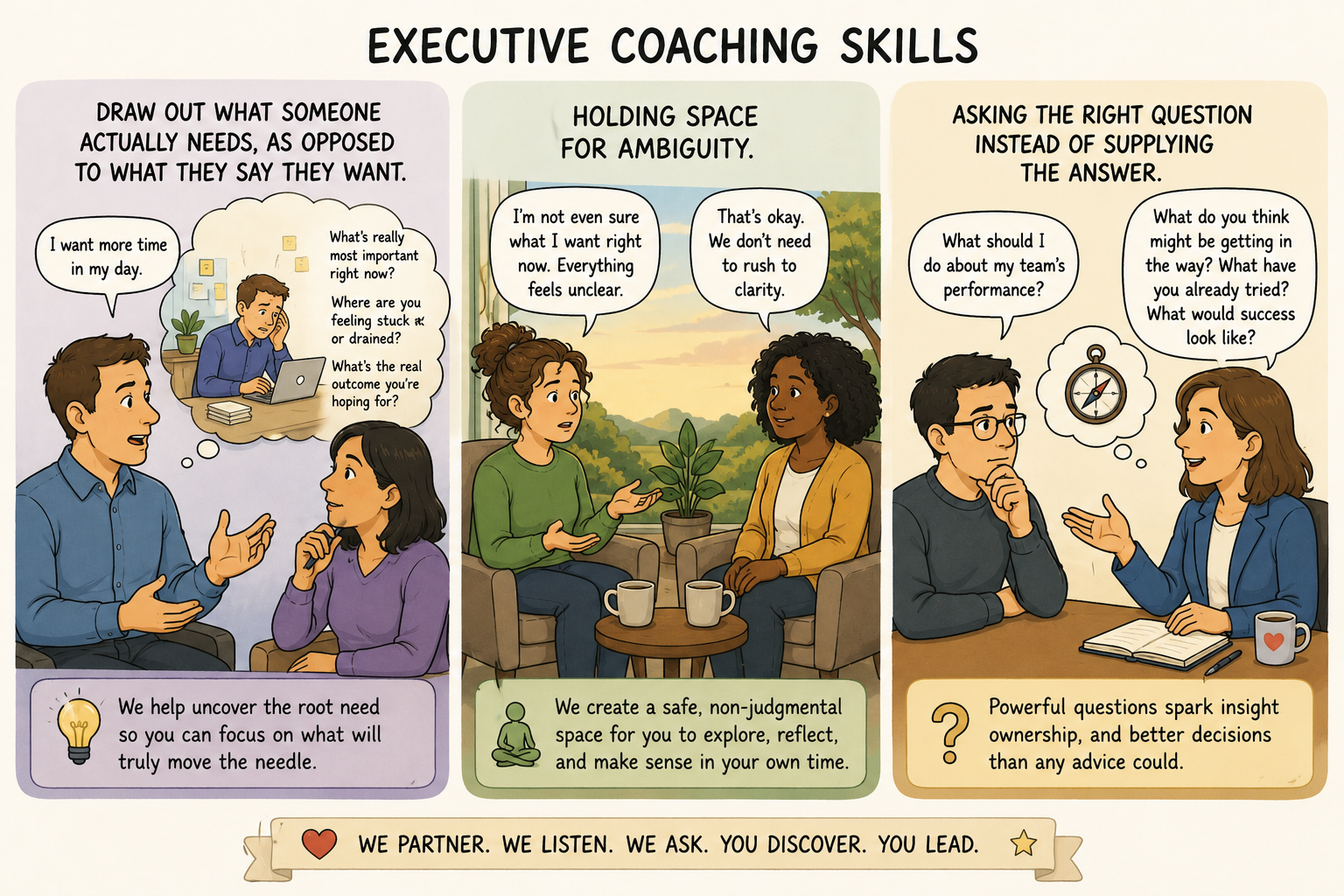
While researching my Knee Recovery Companion app, people kept saying they wanted more tips from their surgeon. What they were actually asking for was reassurance that recovery was on track. A surgeon could theoretically provide that. But surgeons have other patients and surgeries, and rarely have time to hand-hold. That gap became the opening for a digital product: something that could track progress and offer reassurance along the way, while still directing users to their doctor or 911 if anything looked off.
Where the old skills stop and the new ones start
None of this means I can skip the actual learning. Design thinking isn't marketing strategy thinking. I never needed Figma, wireframes, or interactive prototypes in either marketing or coaching. I didn't have the vocabulary. And the only "accessibility" I used to think about was how to structure a client meeting.
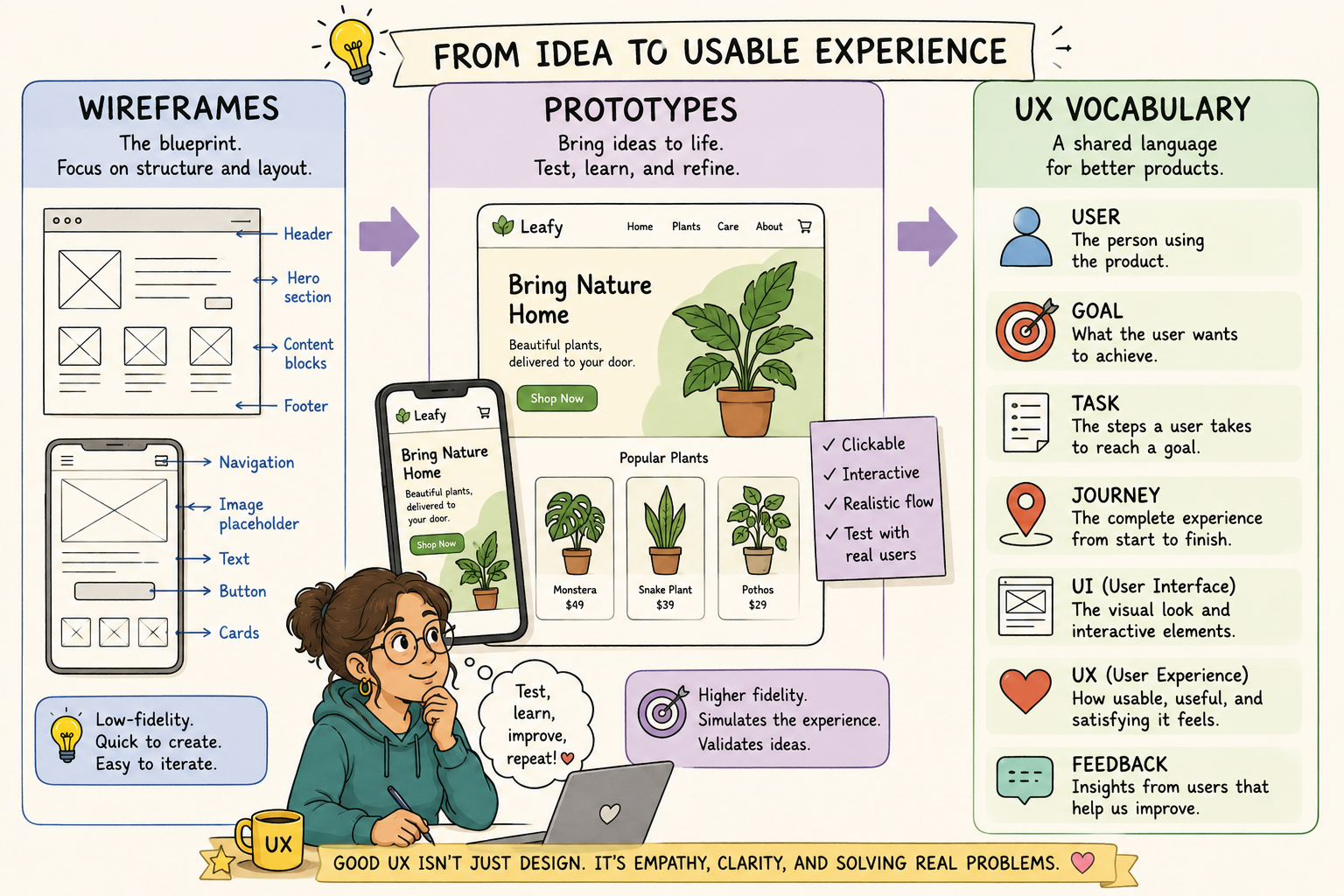
So I am starting from scratch on real parts of UX design — the tools, the deliverables, the discipline-specific thinking. But it's not scratch in the sense of nothing. It's scratch built on research instincts, pattern recognition, and a habit of not trusting the first answer someone gives you. That's not a substitute for UX experience. It's a running start.
Images created with ChatGPT.