Healthcare App or Wellness App? The Line Is Blurrier Than You'd Think
Here's the part that surprised me most in my healthcare UX coursework: whether an app counts as a "healthcare app" or a "wellness app" isn't purely a fact about what it does. It's partly a choice. Call it a wellness app, and in many cases, it's a wellness app — with everything that designation does and doesn't require of you.
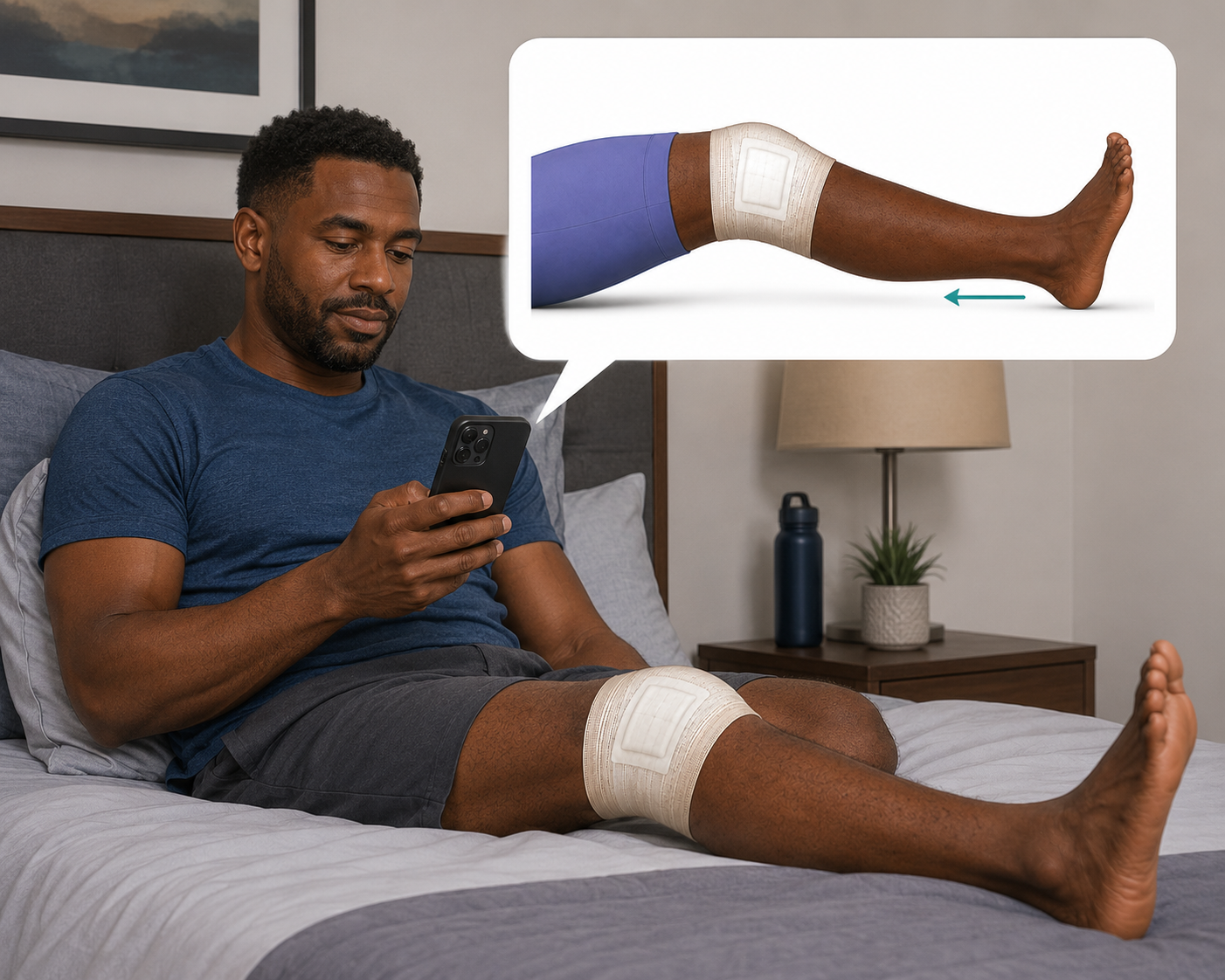
Image generated by ChatGPT illustrating a wellness app — Genura™
What actually separates them
HIPAA and related healthcare regulations generally govern covered entities — providers, health plans, clearinghouses — and the vendors handling data on their behalf. A wellness app that a user fills in voluntarily, with no connection to a provider's system, usually sits outside that framework. It may still be subject to other rules (the FTC's Health Breach Notification Rule, or newer state consumer health data laws), but not HIPAA itself. I'm not a lawyer, and this isn't legal advice, but the practical upshot for designers is real: label something a wellness app, and you're opting into a lighter regulatory load than a healthcare app carries.

Image generated by ChatGPT
The second distinction matters just as much for design: wellness apps should stick to education, not medical advice. And healthcare apps aren't actually exempt from that line either. They shouldn't generate medical advice on their own. Any actual advice needs to come from a real provider, delivered through the app, not manufactured by it.
Three apps, three different answers
I've designed across this line without initially realizing I was doing it.
Droma™, my migraine and POTS tracker, is a wellness app. It logs symptoms, surfaces patterns, and educates. It never tells a user what their symptoms mean or what to do about them. That's a deliberate design boundary as much as a regulatory one: the app's job is to help someone notice a pattern worth bringing to a doctor, not to interpret that pattern for them.
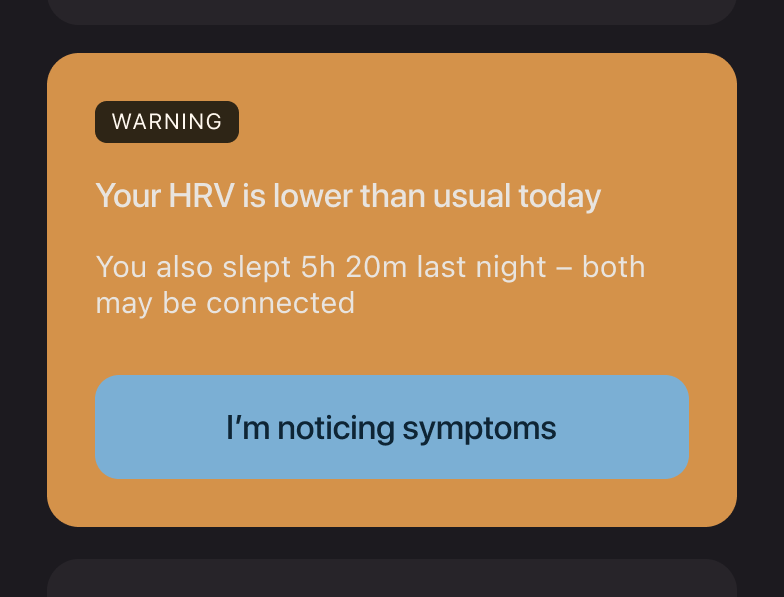
Part of alert screen from Droma™ prototype
Cariva™, my caregiver coordination platform, sits on the healthcare side. It's built to interface with providers, home health aides, and institutional systems like Epic, which means it's handling data in a context where HIPAA obligations are very much in play, not just a design preference.
Genura™, my knee replacement recovery app, is the interesting one, because it's currently designed as wellness but sits right at the edge. Users can upload their own discharge paperwork for personal tracking — logging their own recovery milestones against what their surgeon documented. That's still self-reported data, voluntarily entered by the user, with no direct pipeline to a covered entity's system. It's closer to a health journal than a clinical record. But the moment Genura™ adds EHR sync — pulling data directly from a provider's system rather than having the user manually enter it — that changes. At that point, the app is interfacing with a covered entity's data, and the healthcare designation, and everything that comes with it, would likely follow.
Why this isn't just a legal question
For a UX designer, this line isn't a compliance footnote to check after the design is done — it shapes what the product is allowed to say to a user in the first place. A wellness app's copy has to stop at "here's what we noticed" and never cross into "here's what you should do." A healthcare app has more latitude to surface clinical information, but only when a real provider is the one actually giving guidance through it. Get the designation wrong, or design past its boundary without realizing it, and you've built an interaction model the product was never scoped to support.
Which means, in a very real sense, choosing "wellness" or "healthcare" is one of the first UX decisions on the project — not a legal detail to sort out later, but a constraint that determines what every screen after it is even allowed to do.